This is the link to see our work.
New Zealand
Wednesday, 8 March 2017

Monday, 16 January 2017
GEOGRAPHY EXERCISES
ANSWER THE FOLLOWING QUESTIONS


1.Where in the world is Africa?
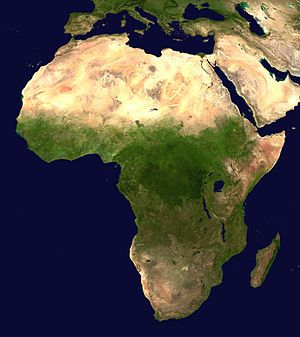
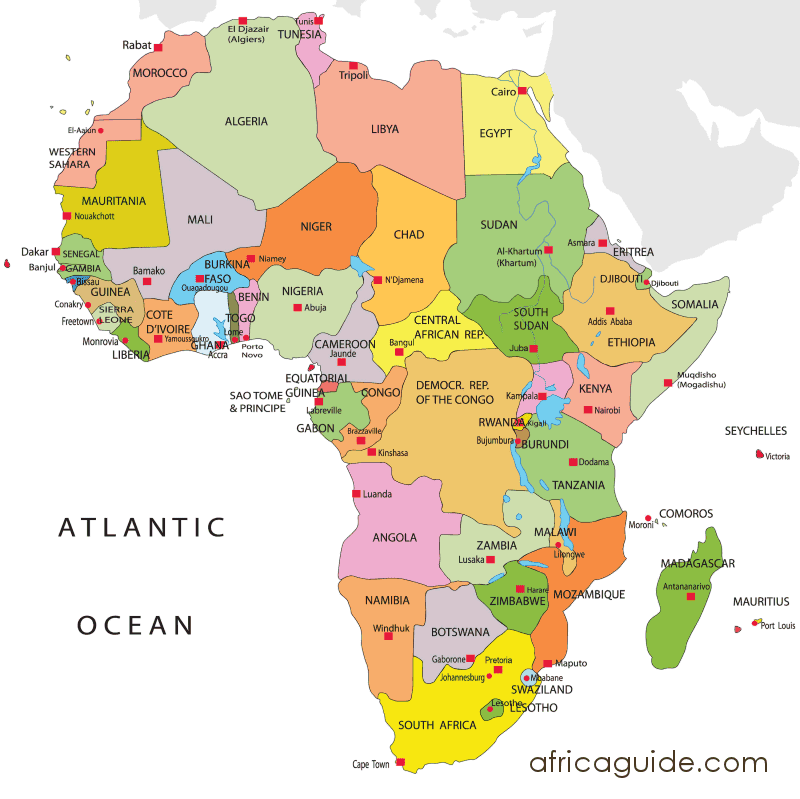
Africa is located in the South of Europe and in the Southwest of Asia.
2.How many times is Africa larger than The United States?
Africa is three times larger than The United States.
3.How is the savanna defined in the video?
The savanna is defined like a grassy plain which covers the half of Africa that is characterized by scattered trees among a landscape of grasses and shrubs.
4.Which animals can be found in the savanna biome?
The animals that can be found in the savanna biome are elephants and giraffes.
5.Where is located the chaparral biome in Africa?
The chaparral biome is located at northern coast of Africa, along the Mediterranean and also in south of Africa.
6.Which are the most famous deserts in Africa?
The most famous deserts in Africa are the Sahara desert, the Namib desert and the Kalahari desert.
7.The main natural resources mentioned in the video are .....
The main natural resources mentioned in the video are gold mines,rober trees and oil.
FIND THE MISSING WORDS
1. Africa runs 5 000 miles from the Mediterranean sea all the way down to the Cape Good Hope and 4 600 miles from Cape Verde all the way over to Somalia.
Africa is located in the South of Europe and in the Southwest of Asia.
2.How many times is Africa larger than The United States?
Africa is three times larger than The United States.
3.How is the savanna defined in the video?
The savanna is defined like a grassy plain which covers the half of Africa that is characterized by scattered trees among a landscape of grasses and shrubs.
4.Which animals can be found in the savanna biome?
The animals that can be found in the savanna biome are elephants and giraffes.
5.Where is located the chaparral biome in Africa?
The chaparral biome is located at northern coast of Africa, along the Mediterranean and also in south of Africa.
6.Which are the most famous deserts in Africa?
The most famous deserts in Africa are the Sahara desert, the Namib desert and the Kalahari desert.
7.The main natural resources mentioned in the video are .....
The main natural resources mentioned in the video are gold mines,rober trees and oil.
FIND THE MISSING WORDS
1. Africa runs 5 000 miles from the Mediterranean sea all the way down to the Cape Good Hope and 4 600 miles from Cape Verde all the way over to Somalia.
2. Biomes are climate zones and throughout that area, throughout that climate zones, you can see the same average temperature and average precipitations what that means is that you also see very similar fauna and vegetation living in that region.
3. The most famous desert in Africa is, of course, the Sahara desert. Now, some parts of the Sahara desert are sandy, like you can see here. Other parts of the Sahara desert are rocky but in either case, the fact that it is very dry is going to make it a very difficult barrier to cross.
4. It is not the rain itself that’s particularly important, it’s also the biodiversity There are many different fauna and vegetation That can be found in the rain forest and that’s one of the thing that makes the rain forest so valuable not just in Africa but throughout the Earth.
5. The Nile is the most famous river in Africa, because is the largest river in the world. But there is also the Congo river which is the second longest river in the world.
6. Africa actually has its own version of the Great Lakes with famous lakes like Lake Kivu,lake Malawi,lake Victoria and lake Tanganyika
7. All the Africa is a plateau. Meaning that Africa itself is an elevated .But that doesn’t mean you can’t find any mountain ranges in Africa. You can find mountain ranges like, for example, the Atlas mountains in northwestern Africa.
8. Africa also has some interesting mountains like Kilimanjaro mountain, the highest peak in Africa which seems to just rise on it own out of the ground.
9. The Great Rift Valley refers to a region of Africa that is literally, being split apart. There are some tectonic plates that are located within or near Africa, that are, actually, moving away from each other, and what’s doing is creating not just some of the highest elevations in Africa, but also lakes like Tanganyika that is among the deepest in the world.
Sunday, 18 December 2016
GEOGRAPHY UNIT 3
Birth rate: the ratio of live births in a specified area, group, etc, to the population of that area, etc, usually expressed per 1000 population per year.
Death rate: the number of deaths per unit, usually 1000, of population in a given place and time.
Natural increase: How much a country is growing.
Infant mortility rate: The death rate of infants during the first year of life.
Life expectancy:The number of years that an individual is expected to live
Birth control: Voluntary prevention of conception by a man or a woman
Family planning: The planning of when to have children.
Fertility rate: The average number of children that would be born to a woman over her lifetime.
Ageing population: When the median age of a country or region increases.


VALLADOLID.
The 2nd of November, we went to Valladlid to see a concert, a castle and to see many wine. The teacher who take with us were Teresa, Luis and Gema. We stayed in Valladolid for eleven hours. Now I am going to tell you the whole trip for the beggining to the ending.
We had to stayed at the school early, at 8:30. We took the bus to Valladolid, that is 110 km away from Salamanca. When we arrived in Valladolid, we had a short free time in the city. I was with Christian, Miguel, Egoitz, Antonio, Adrian and Rodero and we were looking shoes at the Corte Ingles. Then the teachers called us to go to the theater, that is call Miguel Delibes. We saw Vox Balaenae with other schools, but we can't have a good time because the other school was talking all the act. I didn't like so much the act because I didn't understand the modern music, but I have to say that the musicians were very good and the play beautiful music.After the act, we had free time to had lunch. I stayed near the Valladolid football stadium, the Jose Zorrilla. I had lunch with Christian, Antonio, Rodero and Adrian at the top of a skate pitch. I ate a huge sandwich with a Coke. Then I went to a supermarket an I bought chocolate and chewing gum. Then we toook the bus to go to Peñafiel, a village of Valladolid. In the village, there is an amazing castle. At the top of the castle you can see all the village and also many kilometres away. Then we went to a wine exhibition. We learnt a lot about wine and its process. After that we took the bus and we went to Salamanca. I liked so much the trip an I hhpe that we can do more.
 Peñafiel.
 Vox Balaenae.
We had to stayed at the school early, at 8:30. We took the bus to Valladolid, that is 110 km away from Salamanca. When we arrived in Valladolid, we had a short free time in the city. I was with Christian, Miguel, Egoitz, Antonio, Adrian and Rodero and we were looking shoes at the Corte Ingles. Then the teachers called us to go to the theater, that is call Miguel Delibes. We saw Vox Balaenae with other schools, but we can't have a good time because the other school was talking all the act. I didn't like so much the act because I didn't understand the modern music, but I have to say that the musicians were very good and the play beautiful music.After the act, we had free time to had lunch. I stayed near the Valladolid football stadium, the Jose Zorrilla. I had lunch with Christian, Antonio, Rodero and Adrian at the top of a skate pitch. I ate a huge sandwich with a Coke. Then I went to a supermarket an I bought chocolate and chewing gum. Then we toook the bus to go to Peñafiel, a village of Valladolid. In the village, there is an amazing castle. At the top of the castle you can see all the village and also many kilometres away. Then we went to a wine exhibition. We learnt a lot about wine and its process. After that we took the bus and we went to Salamanca. I liked so much the trip an I hhpe that we can do more.
 Peñafiel.
 Vox Balaenae.
FIRST TERM SELF-ASSESSMENT
Well, my
first term in English was great, but in the marks I think I can do it better,
so in the next terms, I hope the marks will be betters, especially in
translation. I can do many things that I couldn’t do before like speak better
than other years because in this year, I have to speak always in English,
without any Spanish. Other thing that I can do is improve my pronunciation, due
to the exercises that we do at class with Clarissa. The thing I liked most was
all the classes with Clarissa and the storytelling with the whole group. My
greatest strengths was the grammar, because I study so much to have great marks
and because for me is the thing I like more. My weakness strength was
translation because I don’t study enough. I think I did many things well, I
payed attention, I participated in class, I did all the homework… I don’t think
I need help, but I think I have to study more to have the marks I hope. Outside
the class, I listen to music in English but I don’t do more things in English
in my free time. I need to improve at Translation, but I think in the second
term I will have better marks. About culture I learnt a lot. In the first term I
learnt about school trips, Australian aborigines and also about blockbusters. I
hope the next term will be better.

QUANTIFIERS, ADVERBS OF DEGREE AND ENGLISH PREPOSITIONS

SIMPLE PAST AND PAST CONTINUOUS

 TOO AND ENOUGH.

ENGLISH PREPOSITIONS

 ADVERBS OF DEGREE
ENGLISH VOCABULARY UNIT 2
-Profitable: making or gaining a profit, advantage, or
benefit.
-Income: payment for goods or for services, or from rents or
investments.
-Well-known: fully or thoroughly known.
-To release: to allow to be known, issued, published, broadcast,
or exhibited.
-To sink: to fall or descend to a lower level or position.
-Box office: the office of a theater, etc., at which tickets
are sold.
Adjectives to describe a film.
-Entertaining
-Hilarious
-Dramatic
-Dull
-Predictable
-Realistic
-Terrifying
-Spectacular
-Disappointing
-Enjoyable


Subscribe to:
Posts (Atom)